Home › Pool Cage Rescreening
Charleston Screens offers complete pool cage rescreen services in Charleston, SC to revive aging enclosures. We remove brittle or torn mesh and install high quality replacement screens across walls and roof panels. Our rescreening improves visibility, airflow, and protection from insects. Contact us to evaluate your enclosure and receive a detailed quote.
Charleston Screens provides professional pool cage rescreen throughout Charleston, SC, South Carolina and the surrounding area. Our licensed, insured crew delivers safe, clean, on-time work with a free estimate before anything begins. Call (843) 887-7199 or request your free quote.
Pool Cage Rescreening for Charleston Backyards
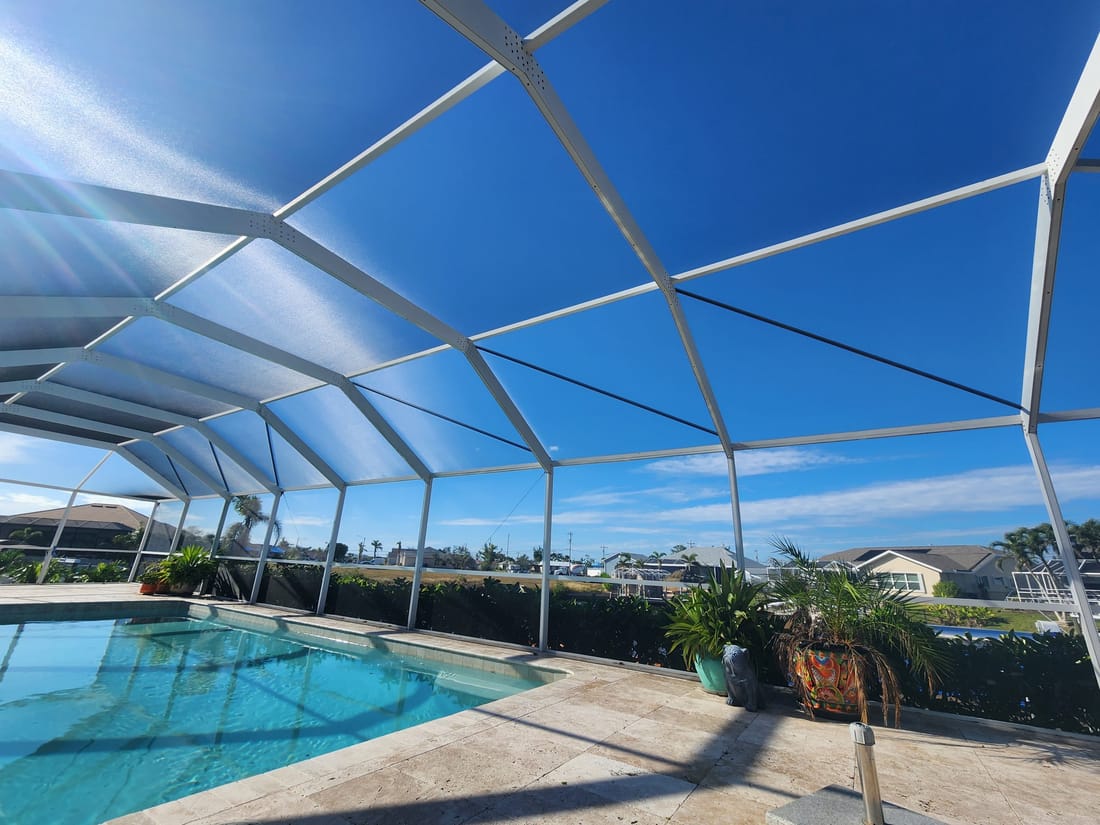
A pool cage rescreen is not a cosmetic touchup. In our climate around Charleston, salt air, UV exposure, and storm debris slowly weaken screen fabric and hardware. Charleston Screens focuses specifically on pool cage rescreening for coastal conditions, so your enclosure stands up longer to sea breeze, summer storms, and pollen season.
When we inspect a pool cage, we are looking for more than just visible tears. We check for brittle mesh, pulled spline, corrosion on fasteners, loose base track, and out‑of‑square frames that cause panels to fail prematurely. By addressing these structural details during a rescreen, you get a tighter enclosure, fewer future repairs, and a cleaner look around your pool.
Many Charleston homeowners call us after noticing more mosquitoes at dusk, fine sand on the deck, or oak leaves and palmetto fronds inside the cage. These are strong signs that the screen has stretched, the weave has opened, or panels are loose at the spline. A full pool cage rescreen solves these issues at once, instead of chasing individual panel repairs month after month.
How Our Pool Cage Rescreen Process Works
When Charleston Screens completes a pool cage rescreen, we follow a defined process that keeps your property protected and your pool usable as much as possible.
First, we schedule an on site evaluation. We measure each section of your cage, inspect the aluminum, fasteners, doors, and kick plates, and identify any bent or twisted members. If we see structural issues, we discuss them before we quote, so there are no surprises once work begins.
Next, we protect your pool and deck. We usually cover the pool surface, move furniture away from work zones, and set up ladder pads to avoid marking pavers and cool deck coatings. Around downtown Charleston, James Island, Mount Pleasant, and West Ashley, many decks have custom finishes or travertine stone, so we pay close attention to how we access the enclosure.
We then remove all old screen and spline. This means pulling the spline from every channel, cutting out panels, and cleaning the groove of sand, paint overspray, and old silicone so the new spline can seat fully. If any fasteners are rusted or stripped, we extract and replace them so the cage will hold tension properly.
After that we install new screen panels. We stretch each panel in sequence, usually starting with the roof sections, then upper walls, then lower walls and doors. Correct order matters, because it prevents the structure from racking and ensures uniform tension. We trim each panel cleanly so there are no tabs that catch wind or collect debris.
Finally, we walk the entire enclosure with you. We check door operation, confirm pet doors close correctly if installed, and rinse down the deck and coping to remove screen dust and loose debris so you can enjoy the pool area right away.
Screen Material Options Built for Coastal South Carolina
Not every pool cage screen holds up the same way in Charleston. When we recommend materials, we factor in your exposure to marsh breeze, shade trees, and how often you use the pool area.
Standard fiberglass pool screen is suitable for many inland neighborhoods. It provides good airflow and insect control at a lower cost. For homes closer to the harbor, on the islands, or with full sun most of the day, Charleston Screens often suggests upgraded meshes. These include tighter weave screens that keep out no-see-ums and sand gnats, or heavy duty screens that resist pet claws and storm blown debris.
We can also install privacy or shade screen on select walls or roof sections. These materials reduce glare off the water, help block views from neighboring homes, and can drop the feel of the temperature on your deck. We often use this setup on western exposures in Mount Pleasant and Daniel Island where late afternoon sun is intense.
Hardware choices matter too. When we rescreen a pool cage, we can swap corroded steel fasteners for stainless or coated options that better handle salt in the air. This is important for homes near Sullivan’s Island, Folly Beach, and the Charleston peninsula where rust shows up quickly on standard screws.
During your estimate, we bring sample pieces so you can see and feel the difference in mesh types, compare visibility from the inside looking out, and choose what fits your priorities for airflow, privacy, and durability.
What Affects the Cost of a Pool Cage Rescreen in Charleston
No two pool cage rescreen projects price out the same way. Charleston Screens explains the cost factors up front so you understand exactly what you are paying for.
The biggest driver is square footage and cage design. A simple rectangular enclosure with standard height walls and a flat roof will be less than a large, multi section cage with a high mansard or dome roof. Roof panels are more labor intensive because they require additional ladder or scaffold setups and safety measures.
Screen material choice also impacts cost. Standard fiberglass mesh is the most economical. No-see-um and heavy duty meshes cost more per square foot, but can be a better value on coastal or wooded properties because they last longer and control more types of pests.
Condition of the existing structure is another factor. If your cage has bent members, rusted screws, or damaged door frames, we may recommend replacing fasteners, re attaching base track, or adjusting doors during the rescreen. Addressing these issues while the screens are off is usually cheaper than handling them later as emergency repairs.
Accessibility plays a role too. Tight side yards in historic Charleston, elevated pool decks, or enclosures built close to marsh or seawalls can require more setup time and specialized ladders. We include these considerations in our estimate so the price we give you reflects the real work required.
When we present your pool cage rescreen quote, it is itemized by materials and labor. We clearly note any recommended structural repairs as separate line items so you can prioritize based on budget and urgency.
Common Pool Cage Problems We Resolve
By the time homeowners call Charleston Screens for a pool cage rescreen, they usually notice more than one issue. Our goal is to correct the underlying causes, not just the visible damage.
In coastal Charleston, wind can stretch or bow roof panels. When this happens, you may see sagging sections that collect leaves and drip dirty water when it rains. During a rescreen, we replace those panels and re tension them correctly, often upgrading to stronger mesh where prevailing winds hit hardest.
Rusting fasteners are also common, especially within a few miles of the coast. Rust weakens key connection points and stains the aluminum. We can replace rusted screws with stainless or ceramic coated hardware and clean rust marks so the frame looks cleaner and holds new screens securely.
Loose spline is another frequent problem. When spline shrinks or hardens over time, panels can pull out of their channels. We fully remove old spline, clean the groove, and install new spline appropriately sized to the channel. This helps prevent future blowouts during storms.
Door issues are high on the list. Pool cage doors often drag, fail to latch, or leave gaps at the threshold where insects enter. During a rescreen, we realign or replace hinges, adjust closers, install new bug sweeps at the bottom, and make sure locks function smoothly so the enclosure is both secure and bug tight.
In shaded or wooded yards, algae and debris can build along the base of the cage, hiding corrosion at the base track. As part of our rescreen service, we inspect this area, clean it out where accessible, and recommend repair if we see metal separation or fasteners pulling loose.
Why Local Expertise Matters for Pool Cage Rescreening
Charleston’s weather patterns, tree types, and building styles create specific challenges for pool cage rescreens. A company that works here daily understands how these factors affect your enclosure over time.
Live oaks and pines around our area drop heavy branches, cones, and sticky pollen strings. We choose screen materials and installation techniques that better tolerate this constant debris load. For example, we pay extra attention to roof panel orientation and tensioning near overhanging limbs to reduce sagging and punctures.
Storms along the South Carolina coast bring sudden wind gusts and blowing sand. Charleston Screens installs screen with appropriate tension and overlap, and we make sure key structural connections are sound so panels are less likely to pull free in rough weather. We also advise homeowners about trimming back vegetation and maintaining gutters so water and debris do not overload the cage.
Local building codes and insurance requirements sometimes influence pool cage work. We stay current on standards that apply to enclosures, including door hardware and barrier requirements around pools. When we rescreen, we keep these issues in mind so your enclosure not only looks better but also functions correctly as part of your overall pool safety system.
Because we are based in Charleston, scheduling and follow up are straightforward. If a storm causes unexpected damage shortly after a rescreen, we are nearby and can respond quickly to evaluate and address the issue.
What to Expect When You Hire Charleston Screens
When you contact Charleston Screens for a pool cage rescreen, we start with a phone conversation to understand your enclosure size, age, and any problems you have noticed, such as pests getting in or sagging panels. We then schedule an on site visit at a time that works with your pool use and household schedule.
At the visit, we measure, inspect, and discuss your goals. Some homeowners want maximum visibility to the marsh or golf course. Others want more privacy from neighboring homes. We recommend specific screen types and hardware based on those goals and your exposure to wind, trees, and salt air.
Once you approve the written estimate, we set a start date and explain how long the pool cage rescreen should take. Most residential cages take 1 to 3 days, depending on size and repairs. We coordinate around pool maintenance or any planned events in your backyard so the timing is practical for you.
During the job, our crew respects your property. We keep tools organized, close gates behind us, and remove all old screen and spline from your yard each day. At the end, we walk the enclosure with you, address any concerns on the spot, and provide basic care tips, such as how to rinse the screens and what to watch for after major storms.
If you are considering a pool cage rescreen anywhere in the Charleston, South Carolina area, we encourage you to contact Charleston Screens for a detailed, no pressure evaluation and a clear explanation of your options.